The Trader Joe's Story · ~32 min read
Based on the Acquired podcast episode by Ben Gilbert & David Rosenthal
The Paradox of Trader Joe's
A tiny grocery chain with no ads, no loyalty program, no e-commerce — generating $2,000 per square foot. More than Apple stores. How?
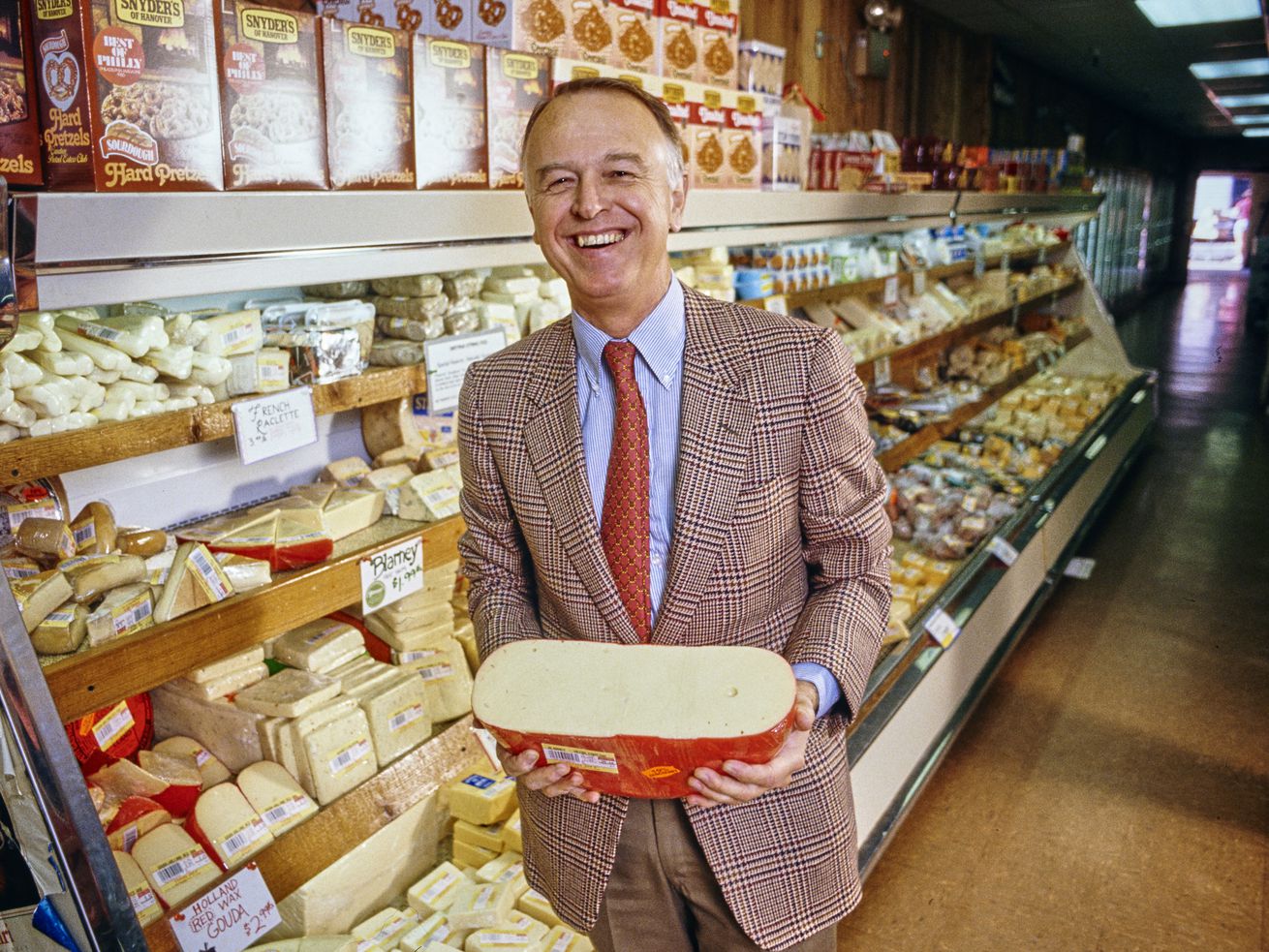
John Blackmer / Orange County Register / Getty Images
Joseph Hardin Coulombe was born in San Diego in 1930. His father was a French Canadian who worked as an engineer. Joe grew up middle-class, studied at Stanford, earned an MBA, and graduated into a California that was about to explode with growth.
He was cerebral — the kind of businessman who read academic journals for fun and carried a briefcase full of research wherever he went. He believed retail was an intellectual puzzle, not just a real estate game.
After Stanford, he joined the Rexall Drug Company and was assigned to manage a small chain of convenience stores called Pronto Markets. This is where our story really begins.
I wanted to appeal to the overeducated and underpaid — people who were smart enough to know what they wanted but too broke to shop at the gourmet stores.
John Blackmer / Orange County Register / Getty Images
Joseph Hardin Coulombe was born in San Diego in 1930. His father was a French Canadian who worked as an engineer. Joe grew up middle-class, studied at Stanford, earned an MBA, and graduated into a California that was about to explode with growth.
He was cerebral — the kind of businessman who read academic journals for fun and carried a briefcase full of research wherever he went. He believed retail was an intellectual puzzle, not just a real estate game.
After Stanford, he joined the Rexall Drug Company and was assigned to manage a small chain of convenience stores called Pronto Markets. This is where our story really begins.
I wanted to appeal to the overeducated and underpaid — people who were smart enough to know what they wanted but too broke to shop at the gourmet stores.
The Franchise Juggernaut
While Joe Coulombe was running six scrappy Pronto Markets in Los Angeles, a quiet revolution was reshaping American retail from Dallas, Texas. The convenience store was becoming the fastest-growing format in the country — and one company was writing the playbook.
7-Eleven didn't just popularize the convenience store — they industrialized it. Standardized layouts, franchise economics, and ruthless expansion turned corner stores into a coast-to-coast empire. By the time they hit Southern California, the message to small operators was clear: adapt or die.
For Joe, the timeline below wasn't history — it was a countdown clock. Every milestone 7-Eleven hit made his Pronto stores less viable.
1927
Southland Ice
Southland Ice Company in Dallas begins selling milk, bread, and eggs alongside ice blocks.
1946
7-Eleven is born
Renamed to 7-Eleven for its 7am–11pm hours — revolutionary in an era when shops closed at 6pm.
1952
Franchise explosion
7-Eleven pioneers the convenience store franchise model. 100+ stores across the South.
1958
California invasion
7-Eleven enters Southern California. Rexall Drug's Pronto Markets face an existential threat.
1962
398 stores
7-Eleven hits 398 stores. Pronto's 6 locations look like a rounding error.
1927
Southland Ice
Southland Ice Company in Dallas begins selling milk, bread, and eggs alongside ice blocks.
1946
7-Eleven is born
Renamed to 7-Eleven for its 7am–11pm hours — revolutionary in an era when shops closed at 6pm.
1952
Franchise explosion
7-Eleven pioneers the convenience store franchise model. 100+ stores across the South.
1958
California invasion
7-Eleven enters Southern California. Rexall Drug's Pronto Markets face an existential threat.
1962
398 stores
7-Eleven hits 398 stores. Pronto's 6 locations look like a rounding error.
7-Eleven stores by 1962
In 1958, Rexall Drug Company handed 27-year-old Joe Coulombe a problem: their chain of Pronto Market convenience stores was getting crushed by 7-Eleven.
Six tiny stores scattered across Los Angeles. Same layout as 7-Eleven. Same products. Same hours. But none of the brand recognition or buying power.
The original mandate was simple — be a 7-Eleven clone, but run by Rexall. It was a losing proposition. You can't out-franchise the franchise king.
Joe knew he needed to find a different game entirely. But first, he needed to own the stores. That meant convincing Rexall to sell.
In 1958, Rexall Drug Company handed 27-year-old Joe Coulombe a problem: their chain of Pronto Market convenience stores was getting crushed by 7-Eleven.
Six tiny stores scattered across Los Angeles. Same layout as 7-Eleven. Same products. Same hours. But none of the brand recognition or buying power.
The original mandate was simple — be a 7-Eleven clone, but run by Rexall. It was a losing proposition. You can't out-franchise the franchise king.
Joe knew he needed to find a different game entirely. But first, he needed to own the stores. That meant convincing Rexall to sell.
The $25,000 Bet
In 1962, Joe Coulombe scraped together everything he had to buy the Pronto Markets chain outright from Rexall Drug. Six tiny convenience stores, all losing ground to 7-Eleven. It was either a stroke of genius or financial suicide.
I scraped together every dollar I had. Twenty-five thousand dollars to buy six convenience stores that were losing to 7-Eleven. My wife thought I was insane.
6 stores · 1962
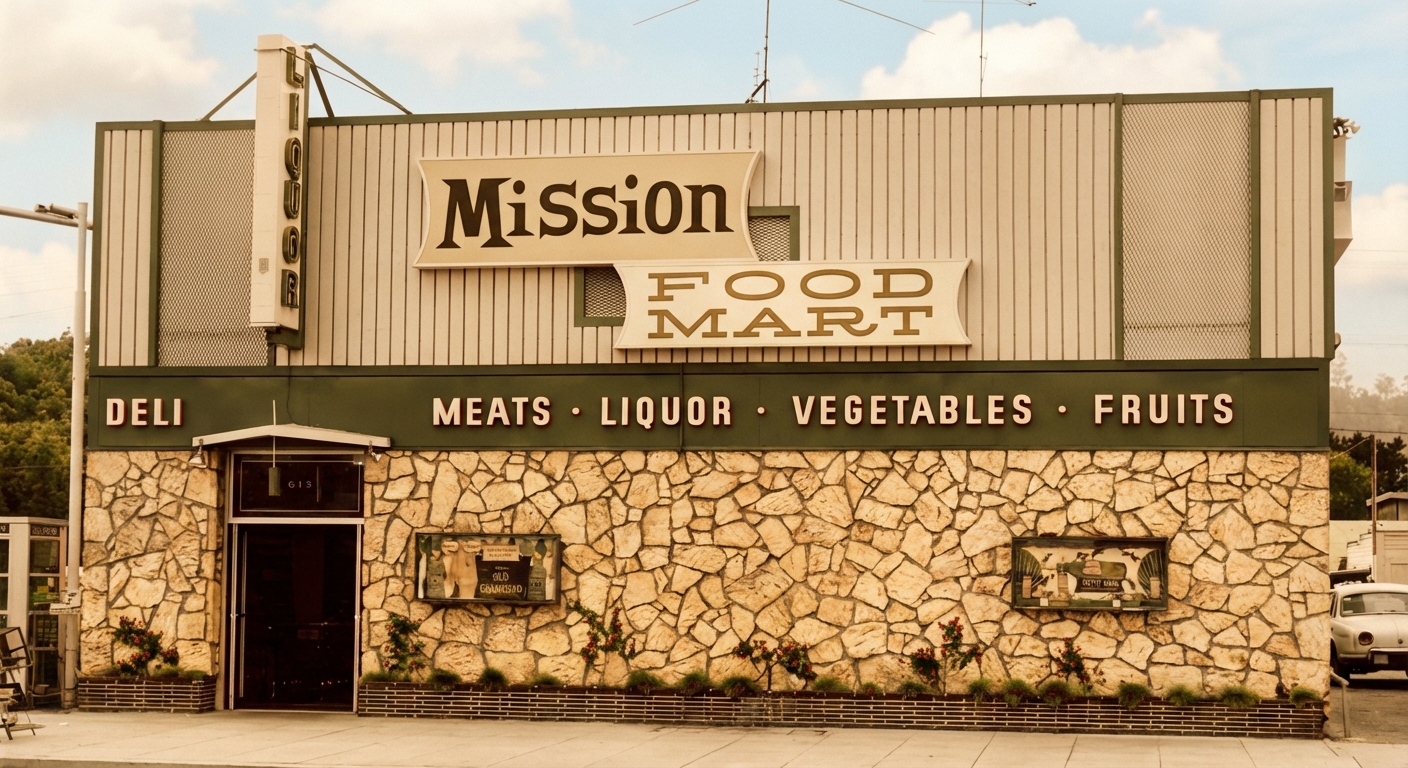
South Pasadena Public Library
By the early 1960s, Joe owned the Pronto stores outright. But 7-Eleven was still eating his lunch. Same products, bigger scale, lower prices.
He tried everything — longer hours, better locations, more inventory. Nothing worked. The convenience store playbook was 7-Eleven's to write.
Then in 1965, something happened that changed everything. A development in Malibu threatened to destroy the ranch-country character of the coast.
Joe and his wife took a trip to escape the stress of the business. They ended up on the Caribbean island of St. Barts. What he saw there would change American grocery forever.
South Pasadena Public Library
By the early 1960s, Joe owned the Pronto stores outright. But 7-Eleven was still eating his lunch. Same products, bigger scale, lower prices.
He tried everything — longer hours, better locations, more inventory. Nothing worked. The convenience store playbook was 7-Eleven's to write.
Then in 1965, something happened that changed everything. A development in Malibu threatened to destroy the ranch-country character of the coast.
Joe and his wife took a trip to escape the stress of the business. They ended up on the Caribbean island of St. Barts. What he saw there would change American grocery forever.
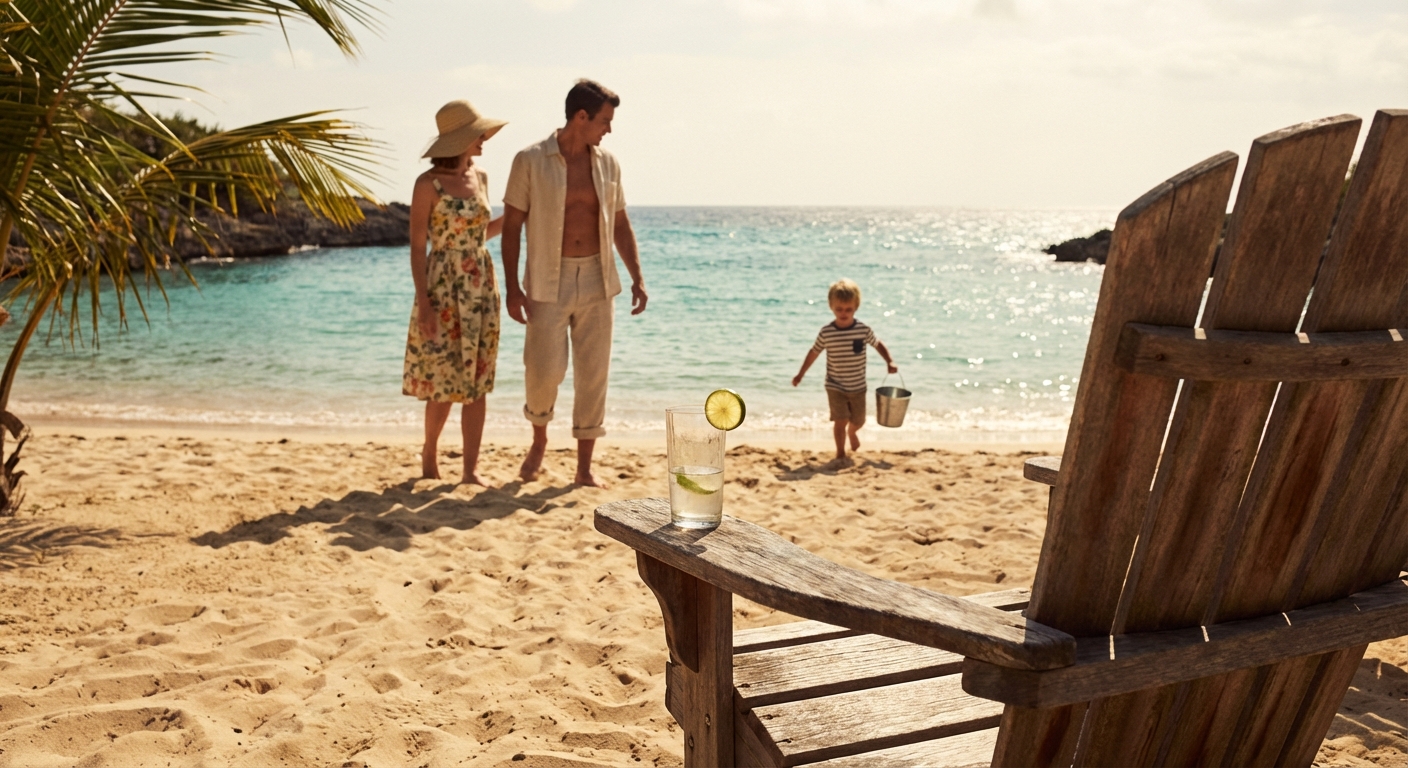
I was sitting on the beach in St. Barts, watching the tourists. Educated, well-traveled, adventurous. They wanted something different. And suddenly I realized — these were my customers.
— Joe Coulombe
Air travel was democratizing. By 1965, more Americans had been abroad than in all of history combined.
The GI Bill was creating a massive class of college-educated consumers who had tasted wine in France and cheese in Italy.
These people came home to American supermarkets full of Wonder Bread and Velveeta. There was a gap — and nobody was filling it.
Two Bolts of Lightning
U.S. College Enrollment, 1945–1965
The Overeducated Consumer
College enrollment was up 700% since WWII. A new class of educated consumers wanted sophisticated food at working-class prices.
0%College enrollment growth since WWII
The End of Fair Trade Laws
In 1966, California repealed Fair Trade pricing laws. For the first time, retailers could undercut manufacturer-set prices. This meant Joe could sell premium goods at discount prices.
1966
Fair Trade laws repealed in CA
The Hard Liquor Moat
California capped the number of hard liquor licenses a retailer could hold. Joe's Pronto stores already had them. By pivoting to a gourmet wine-and-spirits concept, he'd lock in a regulatory advantage that 7-Eleven could never replicate.
Strategic insight
In California, you needed a separate license to sell hard liquor — and licenses were capped. Joe realized his Pronto stores already had these licenses. If he pivoted to a gourmet-wine-and-spirits concept, he'd have a regulatory moat that 7-Eleven could never cross.
August 1967
610 South Arroyo Parkway, Pasadena, CA
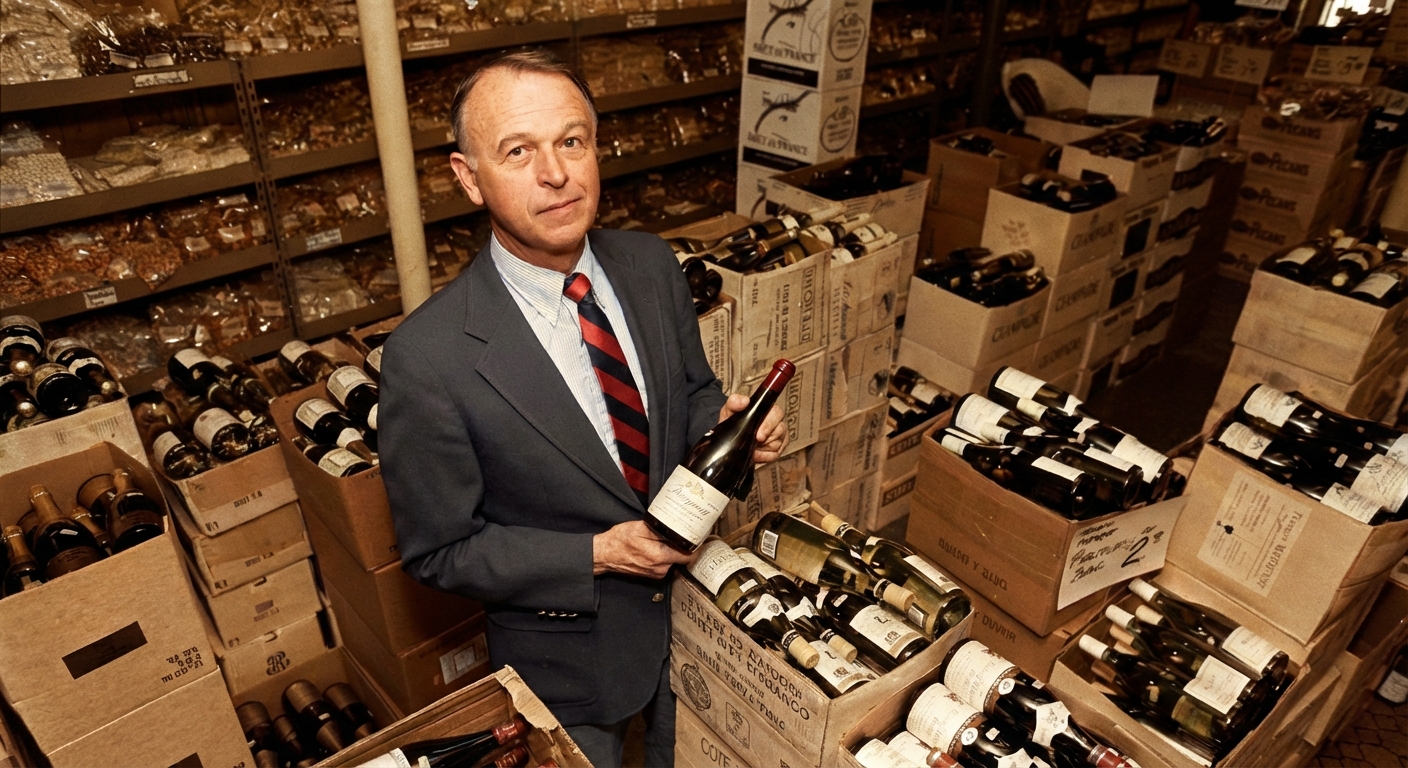
Ken Lubas / Los Angeles Times
The first Trader Joe's was a converted Pronto Market — barely 5,000 square feet.
Tiki decor, cedar plank walls, and Hawaiian shirts on every employee. Joe wanted the store to feel like a South Seas trading post.
The name itself was a play on Trader Vic's, the tiki bar chain that was wildly popular with the same demographic Joe was targeting.
On day one, the store stocked an unheard-of selection of California wines at prices 20–40% below the competition.
Joe Coulombe had found his white space — but building a cult brand from a single Pasadena storefront would require a playbook that broke every rule in retail.
Chapter II
The Aldi Paradox
The world's most secretive family bought the world's quirkiest grocery brand. And the best thing they did was… nothing.
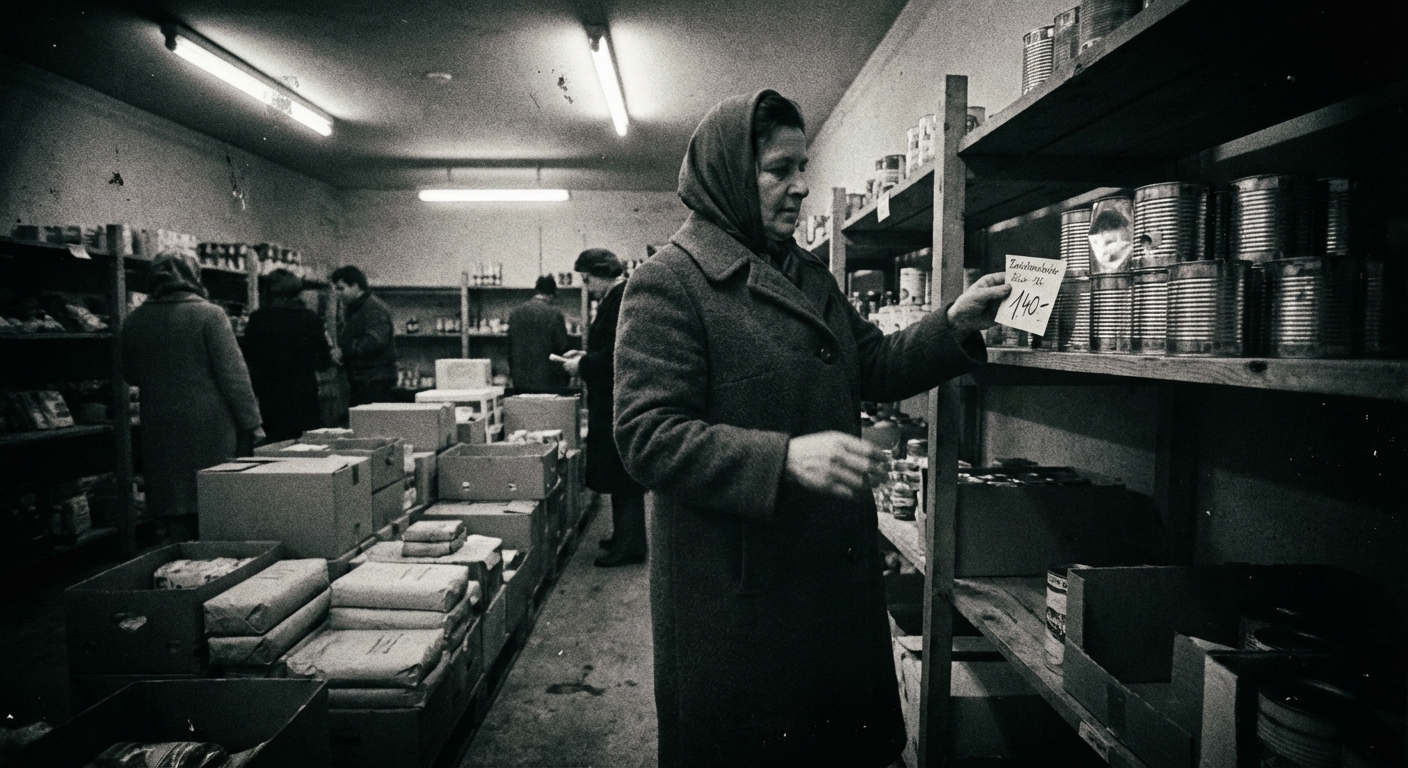
Essen, West Germany · 1974
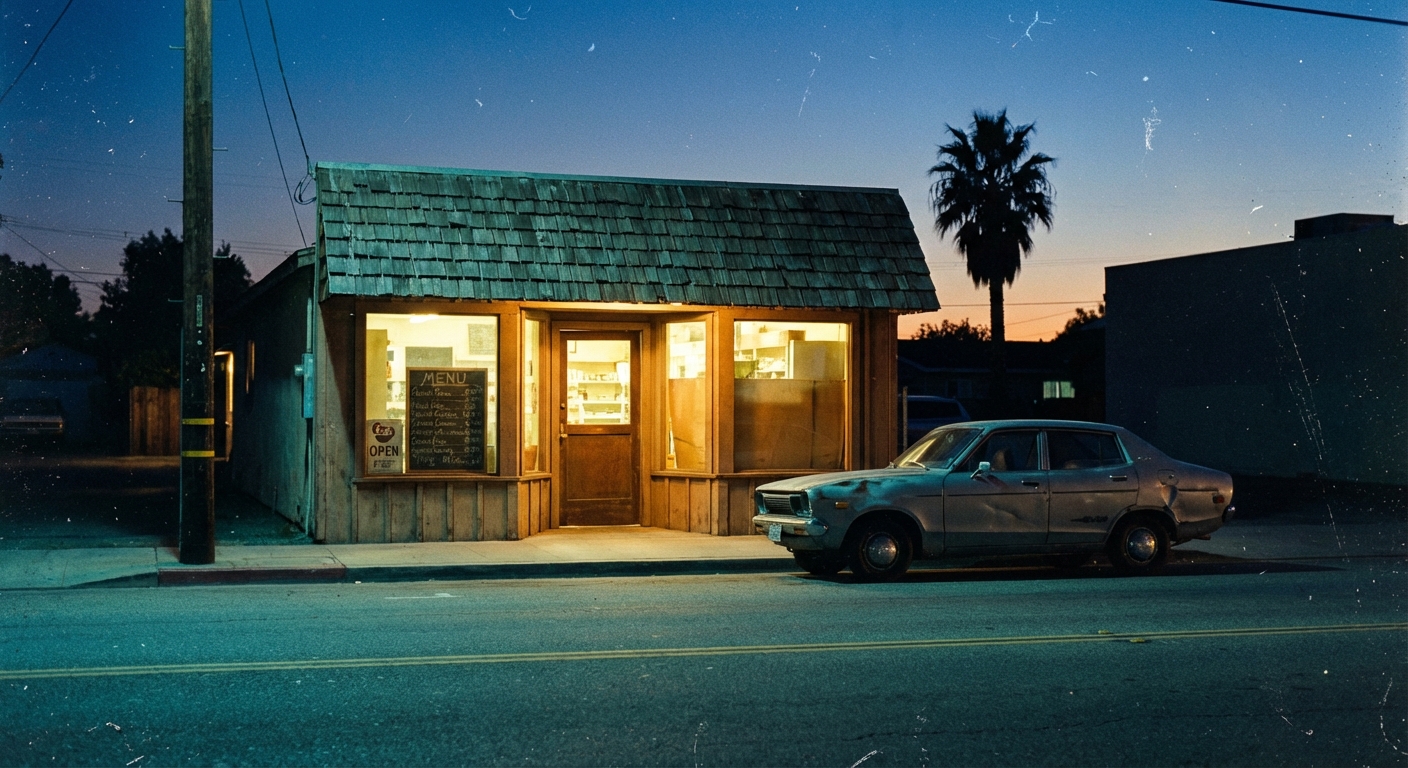
Pasadena, California · 1977
Nanobanana / AI-generated illustration
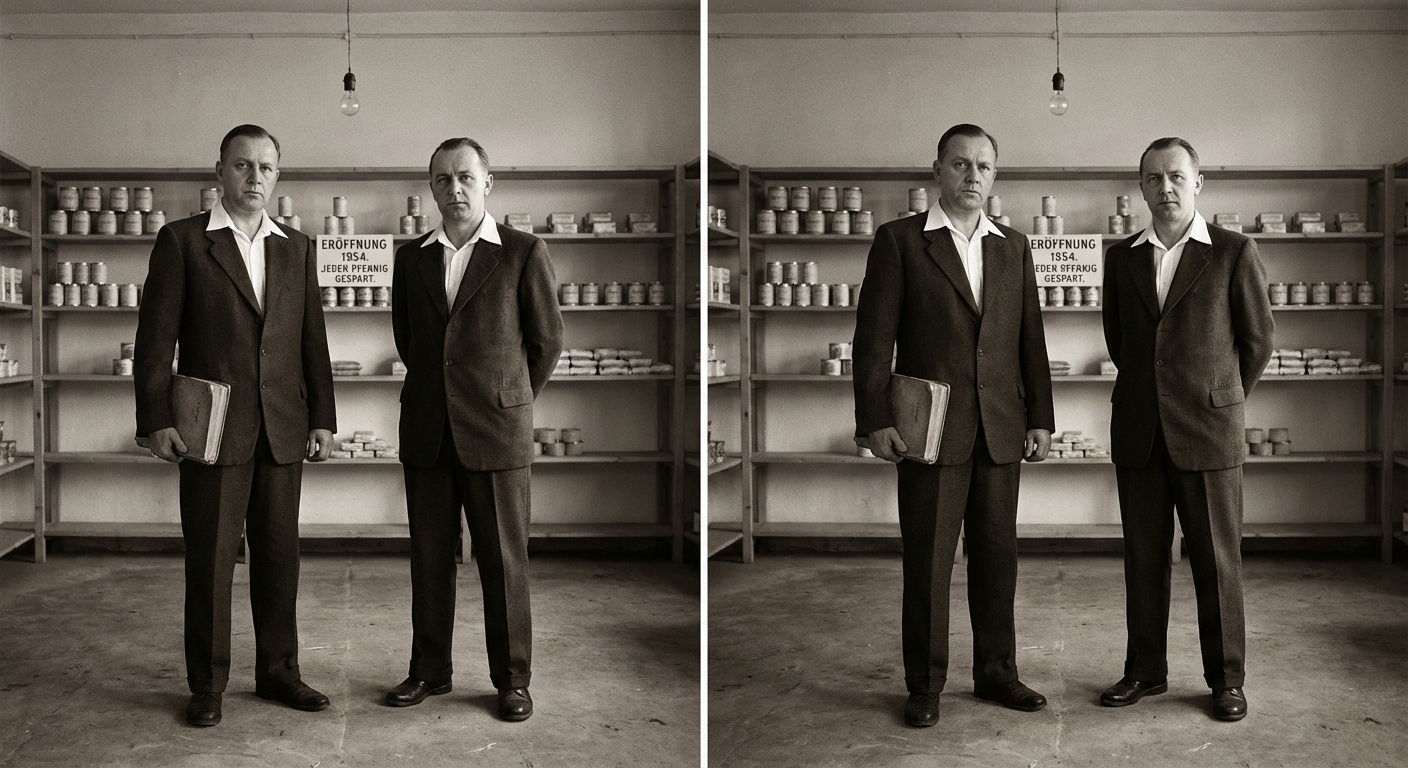
Nanobanana / AI-generated illustration
In 1913, Anna Albrecht opened a small grocery store in Essen, Germany. After the war, her two sons — Karl and Theo — took over. They had one obsession: eliminating waste.
By the mid-1950s, the brothers had built Albrecht Diskont (Aldi) into 300 bare-bones stores across Germany. No decor, no marketing, no brands — just the lowest prices in Europe.
In 1960, the brothers had their only recorded disagreement: whether to sell cigarettes. Karl said no (too much shoplifting). Theo said yes. They couldn't resolve it.
The solution was extraordinary. They split the company in two — Aldi Nord (Theo, northern Germany) and Aldi Süd (Karl, southern Germany). A handshake deal between brothers that created two separate retail empires.
In 1971, Theo was kidnapped and held for 17 days. The ransom was 7 million Deutschmarks. After his release, both brothers vanished from public life entirely. No interviews. No photos. No appearances. Ever.
The Albrecht brothers were more reclusive than the yeti — except the yeti at least had alleged sightings.
In 1913, Anna Albrecht opened a small grocery store in Essen, Germany. After the war, her two sons — Karl and Theo — took over. They had one obsession: eliminating waste.
By the mid-1950s, the brothers had built Albrecht Diskont (Aldi) into 300 bare-bones stores across Germany. No decor, no marketing, no brands — just the lowest prices in Europe.
In 1960, the brothers had their only recorded disagreement: whether to sell cigarettes. Karl said no (too much shoplifting). Theo said yes. They couldn't resolve it.
The solution was extraordinary. They split the company in two — Aldi Nord (Theo, northern Germany) and Aldi Süd (Karl, southern Germany). A handshake deal between brothers that created two separate retail empires.
In 1971, Theo was kidnapped and held for 17 days. The ransom was 7 million Deutschmarks. After his release, both brothers vanished from public life entirely. No interviews. No photos. No appearances. Ever.
The Albrecht brothers were more reclusive than the yeti — except the yeti at least had alleged sightings.
Nanobanana / AI-generated illustration
The Reluctant Sale
By the late 1970s, Joe Coulombe had built Trader Joe's into a profitable 21-store chain. Every location had been profitable since 1976. He'd created something genuinely unique in American retail.
Joe wanted to set up an Employee Stock Ownership Plan — let the people who built the brand own a piece of it. But a change in tax law made the ESOP structure financially ruinous.
Enter Theo Albrecht. Aldi Nord had been quietly buying grocery chains across Europe and was looking at America. The deal was struck at roughly three times book value — and sealed with a contract so simple it stunned Joe's lawyers.
book value · 21 stores · 1979
The One-Page Contract
The acquisition agreement guaranteed complete operational independence. Aldi would never interfere with product selection, store design, employee policies, or the Trader Joe's brand. It was the corporate equivalent of 'We'll write the checks. You do your thing.'
I was determined never to sell. But when the tax laws changed, the ESOP became impossible. Theo Albrecht offered complete independence. I took it — and never fully made peace with it.
TJ's vs. Average Supermarket
The Private Label Revolution
4,000
Curated SKUs (vs 40,000 at avg supermarket)
80%
Private label (industry avg: 18%)
30–50%
Cheaper than Whole Foods
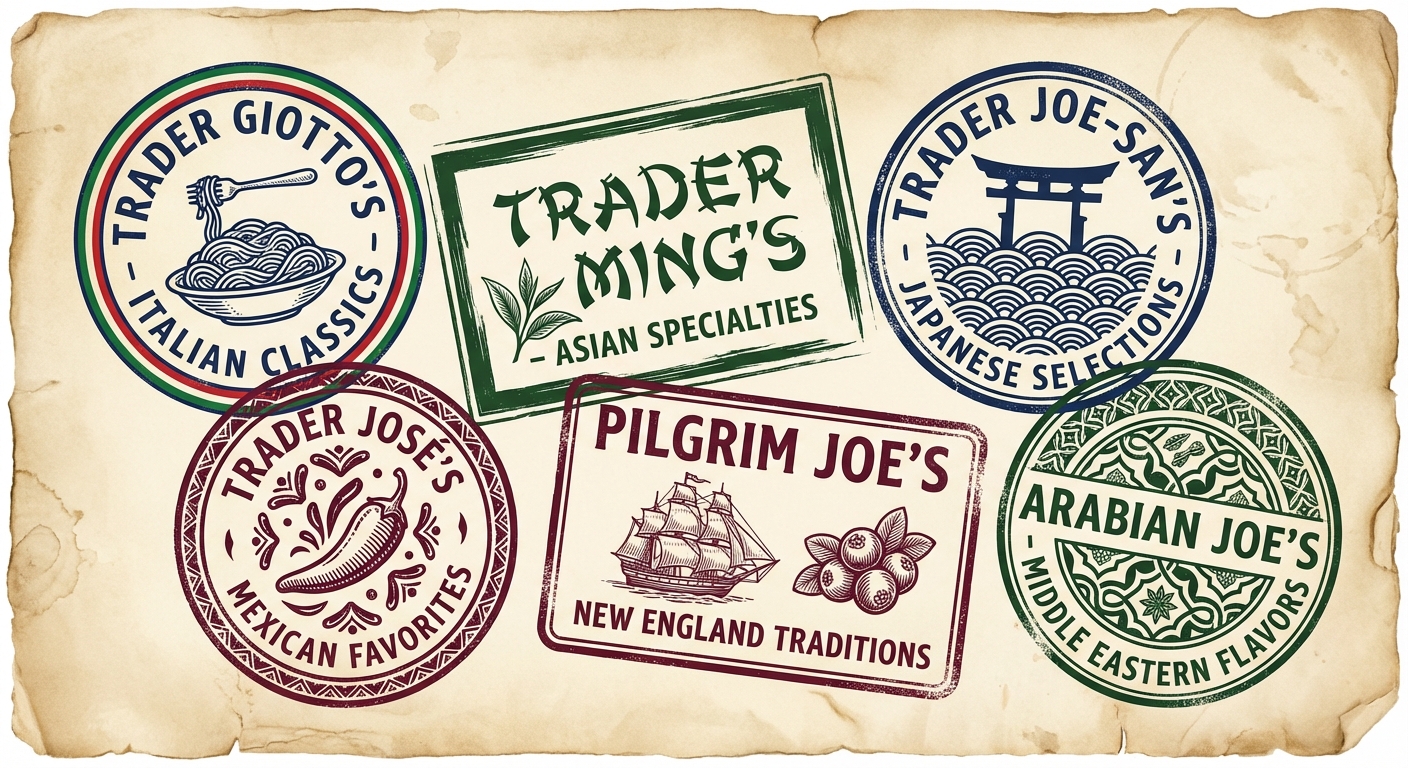
The TJ's Alter Egos
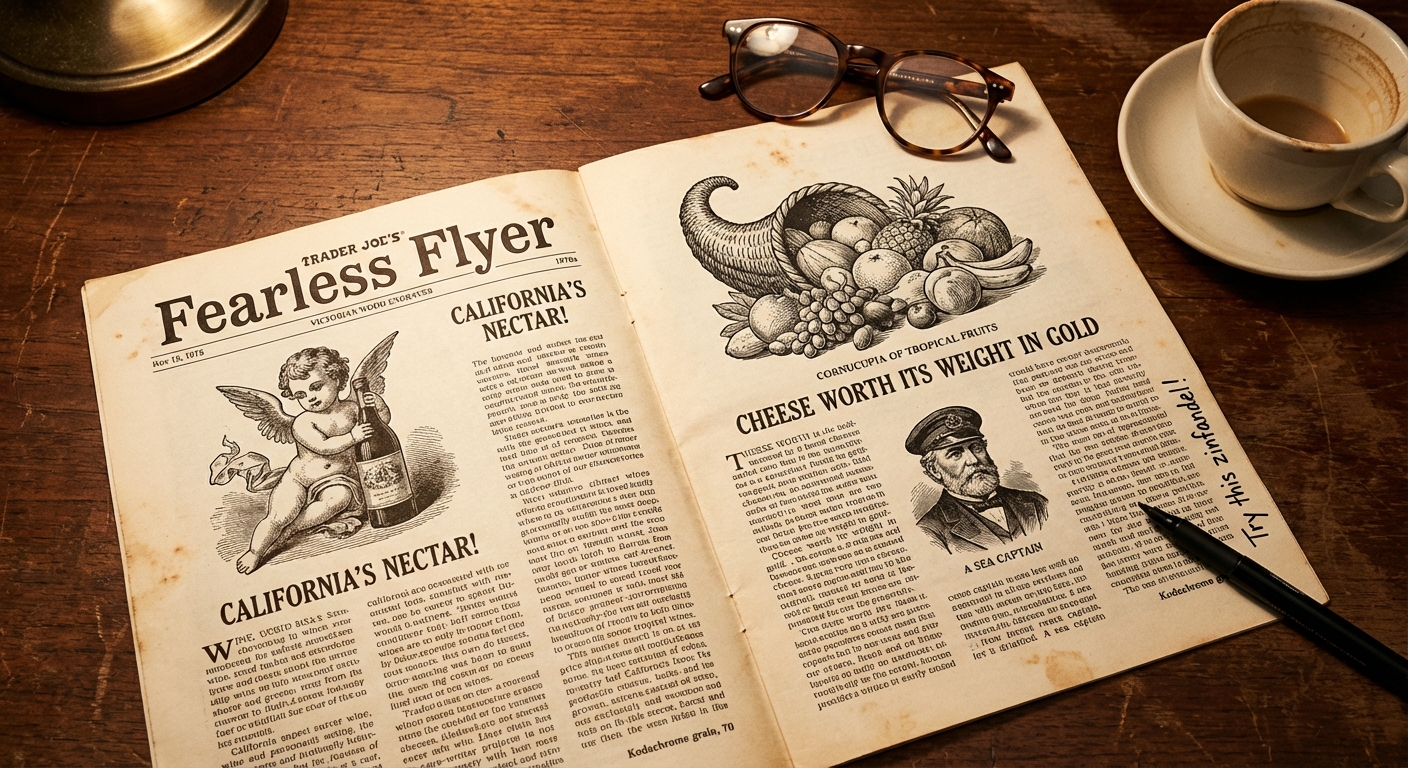
A cross between Consumer Reports and Mad Magazine — written for people who read the ingredient list before the price tag.
— The New York Times
Wine Newsletter Origins
The Fearless Flyer began in 1969 as a wine-buying guide — one of the first direct-to-consumer content marketing pieces in retail history.
Victorian Wit
Victorian woodcut illustrations paired with Ogilvy-inspired copywriting. Each product got a short essay, not a bullet-point spec sheet.
Content Before Content Marketing
Decades before the term 'content marketing' existed, TJ's was building brand loyalty through editorial voice — no coupons, no price matching, just stories.
Trader Joe's stores are 10,000–15,000 square feet. A typical supermarket is 45,000–65,000. This isn't a budget constraint — it's a strategic weapon. Smaller stores mean lower rent, faster restocking, and a treasure-hunt browsing experience.
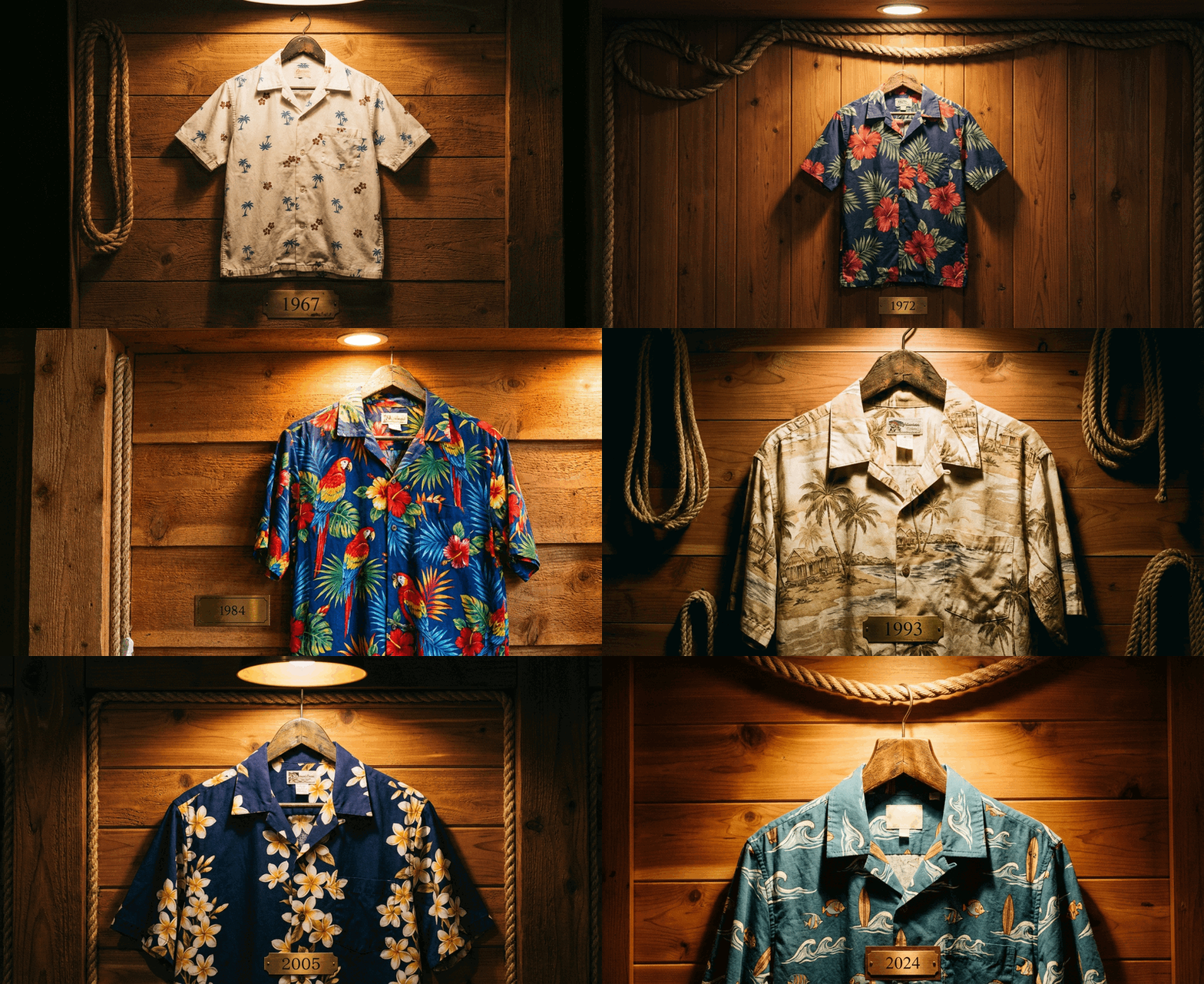
The tiki theme started as a South Seas trading post aesthetic in the original 1967 Pasadena store. Cedar plank walls, ship bells, hand-lettered signs. Joe wanted shopping to feel like an adventure, not an errand.
Hawaiian shirts weren't dress code — they were philosophy. The 'Captain' (store manager) and 'Crew' (employees) created a flat hierarchy that felt more like a ship's company than a corporate org chart.
Every store features hand-painted chalkboard signs by a local artist. No two stores look exactly alike. This deliberate imperfection was the antithesis of the sterile, standardized supermarket.
What they DON'T have is the real strategy: no self-checkout, no loyalty cards, no coupons, no delivery service, no e-commerce, no mobile app. Every absence is intentional — it forces human connection and keeps overhead razor-thin.
Trader Joe's stores are 10,000–15,000 square feet. A typical supermarket is 45,000–65,000. This isn't a budget constraint — it's a strategic weapon. Smaller stores mean lower rent, faster restocking, and a treasure-hunt browsing experience.
The tiki theme started as a South Seas trading post aesthetic in the original 1967 Pasadena store. Cedar plank walls, ship bells, hand-lettered signs. Joe wanted shopping to feel like an adventure, not an errand.
Hawaiian shirts weren't dress code — they were philosophy. The 'Captain' (store manager) and 'Crew' (employees) created a flat hierarchy that felt more like a ship's company than a corporate org chart.
Every store features hand-painted chalkboard signs by a local artist. No two stores look exactly alike. This deliberate imperfection was the antithesis of the sterile, standardized supermarket.
What they DON'T have is the real strategy: no self-checkout, no loyalty cards, no coupons, no delivery service, no e-commerce, no mobile app. Every absence is intentional — it forces human connection and keeps overhead razor-thin.
Less is More
Joe Coulombe distilled his buying philosophy into four ruthless tests. Every product on every shelf had to pass all four — no exceptions, no politics, no legacy holds.
High Value per Cubic Inch
Every product must justify its shelf space. With only 4,000 SKUs vs 40,000, a product that doesn't sell fast gets cut — no second chances.
High Consumption Rate
Trader Joe's wants products people buy every week, not once a year. High turnover means fresher stock and more revenue per shelf foot.
Easily Handled
Products must be easy to ship, stock, and store. This is why you won't find many oddly shaped or fragile items — efficiency is baked into the product selection.
Outstanding Price or Assortment
Either offer a price no competitor can touch (by going direct to producers) or offer something nobody else carries. Preferably both.
One In, One Out
When a new product enters the store, an underperformer leaves. This creates the 'treasure hunt' effect — shoppers buy immediately because their favorite item might vanish next week. Scarcity as strategy.
Trader Joe's buys direct from producers worldwide, pays cash on delivery, and never asks for slotting fees. Suppliers get certainty; TJ's gets prices 20–40% below wholesale.
minimum wage starting pay
6%
TJ's Crew Turnover
65%
Industry Avg Turnover
100%
Promote from Within
$100K+
Captain Salary
This is the most important single business decision I ever made: to pay people well.
— Joe Coulombe
In 1988, Joe Coulombe walked away from the company he built. But the machine he created was just getting started.
Chapter III
The Cult Machine
Joe Coulombe walked away in 1988. The machine he built was just getting started.
Nanobanana / AI-generated illustration
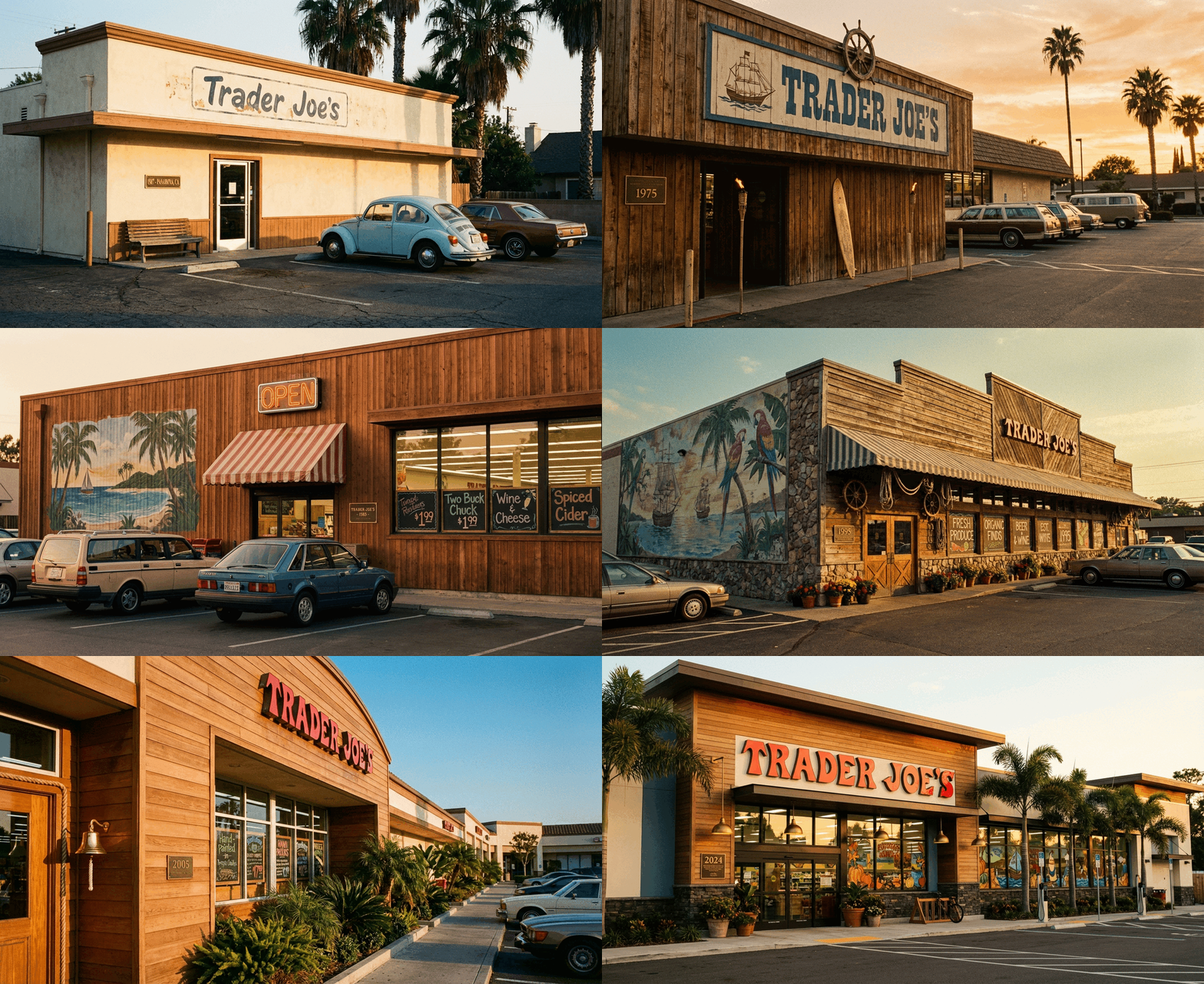
When Joe Coulombe walked away in 1988, he handed the keys to John Shields — a quiet operator who had spent a decade learning Joe's playbook from the inside. Shields didn't reinvent. He scaled.
Under Shields, the chain grew from 27 stores to 158, expanding from California to Arizona, Oregon, and the Pacific Northwest. No fanfare. No press tours. Just methodical, disciplined growth.
Dan Bane took over in 2001 and tripled the footprint to 543 stores, pushing east past the Mississippi for the first time. Bryan Palbaum succeeded him in 2023. Three CEOs in 35 years — all internal promotions, zero celebrity.
The Product Gauntlet
4,000 SKUs vs 40,000. The discipline of less isn't a limitation — it's the entire strategy. Every product on the shelf has survived a gauntlet that most grocers can't imagine.
Products rotate without notice, creating a perpetual FOMO loop. Your favorite snack might vanish next Tuesday. This isn't poor inventory management — it's engineered scarcity.
Seasonal products create annual mania. Pumpkin Joe-Joe's in October, Everything But The Bagel Seasoning year-round (after fans rioted when it was briefly seasonal), Candy Cane Joe-Joe's in December.
The secret tasting panel: anonymous crew members convene in a sterile room. 70% must vote yes for a product to make the shelf. Even candles get burned. Even hand soap gets lathered. It's an ultra-Darwinian exercise.
"One in, one out" at industrial scale. When a new product enters, an underperformer exits. The result: customers buy immediately because their favorite item might vanish next week. Scarcity as strategy.
The Product Gauntlet
4,000 SKUs vs 40,000. The discipline of less isn't a limitation — it's the entire strategy. Every product on the shelf has survived a gauntlet that most grocers can't imagine.
Products rotate without notice, creating a perpetual FOMO loop. Your favorite snack might vanish next Tuesday. This isn't poor inventory management — it's engineered scarcity.
Seasonal products create annual mania. Pumpkin Joe-Joe's in October, Everything But The Bagel Seasoning year-round (after fans rioted when it was briefly seasonal), Candy Cane Joe-Joe's in December.
The secret tasting panel: anonymous crew members convene in a sterile room. 70% must vote yes for a product to make the shelf. Even candles get burned. Even hand soap gets lathered. It's an ultra-Darwinian exercise.
"One in, one out" at industrial scale. When a new product enters, an underperformer exits. The result: customers buy immediately because their favorite item might vanish next week. Scarcity as strategy.
The Tasting Room
An ultra-Darwinian exercise in a sterile room. Anonymous crew members taste, test, and vote on every single product. 70% approval or it's dead. No executives in the room. No brand loyalty. Just palates.
Nanobanana / AI-generated illustration
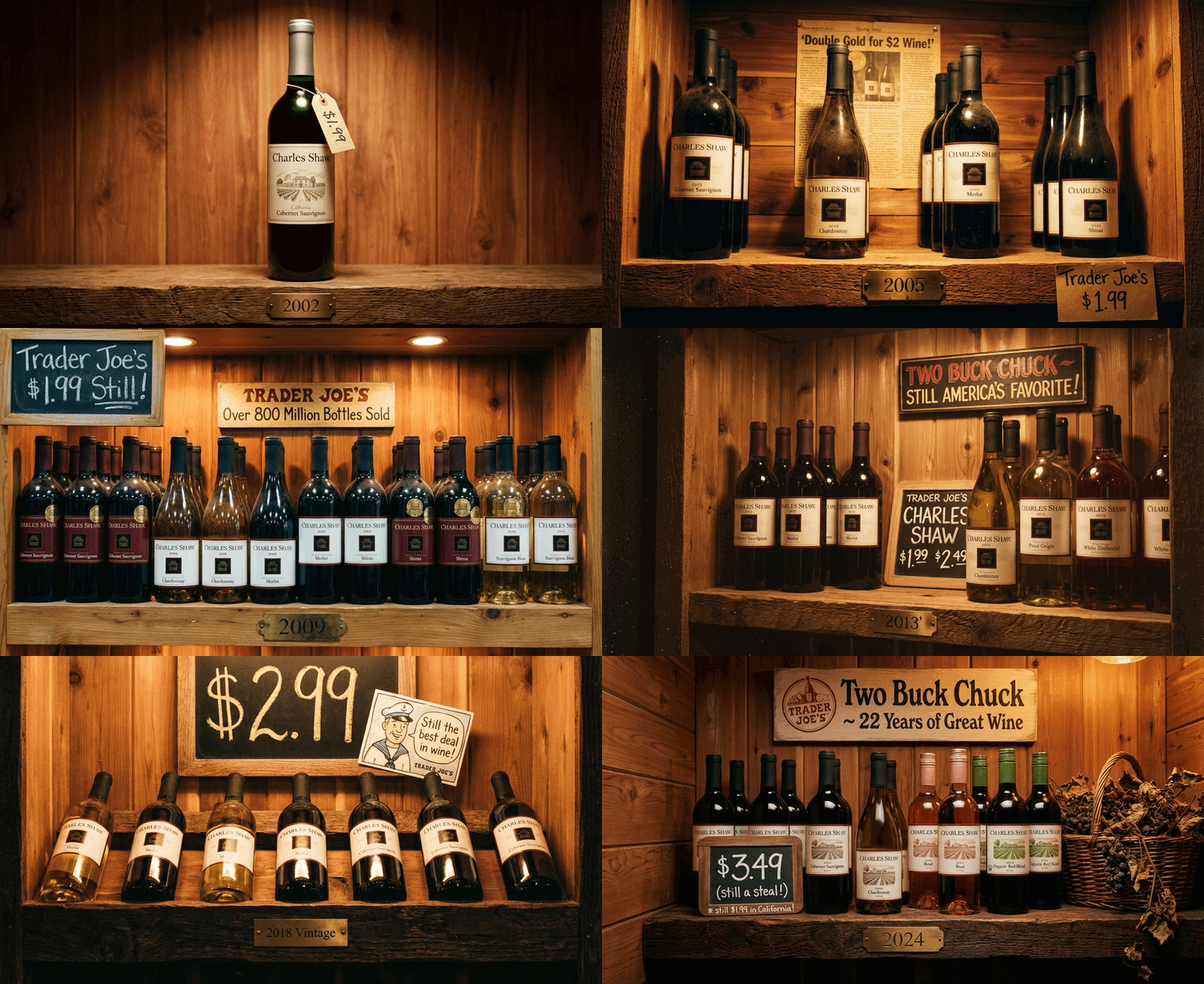
In 1995, Fred Franzia — nephew of Ernest Gallo and the wine industry's most notorious provocateur — bought the Charles Shaw brand name for $27,000 at a bankruptcy auction.
Seven years later, he struck a deal with Trader Joe's to sell bottles at $1.99. Customers filled SUVs with cases. Stores in LA sold a million bottles in the first three months.
In 2007, a bottle of Two Buck Chuck won double gold at the California State Fair wine competition — beating a $67 Napa Valley reserve. The wine establishment was apoplectic.
The real Charles Shaw finds Two Buck Chuck embarrassing and demeaning — and has never seen a penny.
— Wine industry observer
$27,000
Brand purchase price
$1B+
In retail sales
Competitive Radar
The Anti-Grocer
What Trader Joe's refuses to do is more revealing than what it does.
The Six Refusals
Invest in People, Not Technology
"We're not going to put self-checkout in our stores. We like talking to our customers." — Trader Joe's official policy. Every absence is intentional: no loyalty cards means no data brokering, no coupons means no price games, no delivery means you have to walk the aisles.
Revenue per Square Foot
The Fan Economy
Annual Ad Spend
$0
While competitors pour billions into marketing, Trader Joe's spends nothing. Their customers do it for them.
1.5M
Followers (@TraderJoesList)
1.2B
TikTok impressions
86/100
ACSI score (#1 grocer)
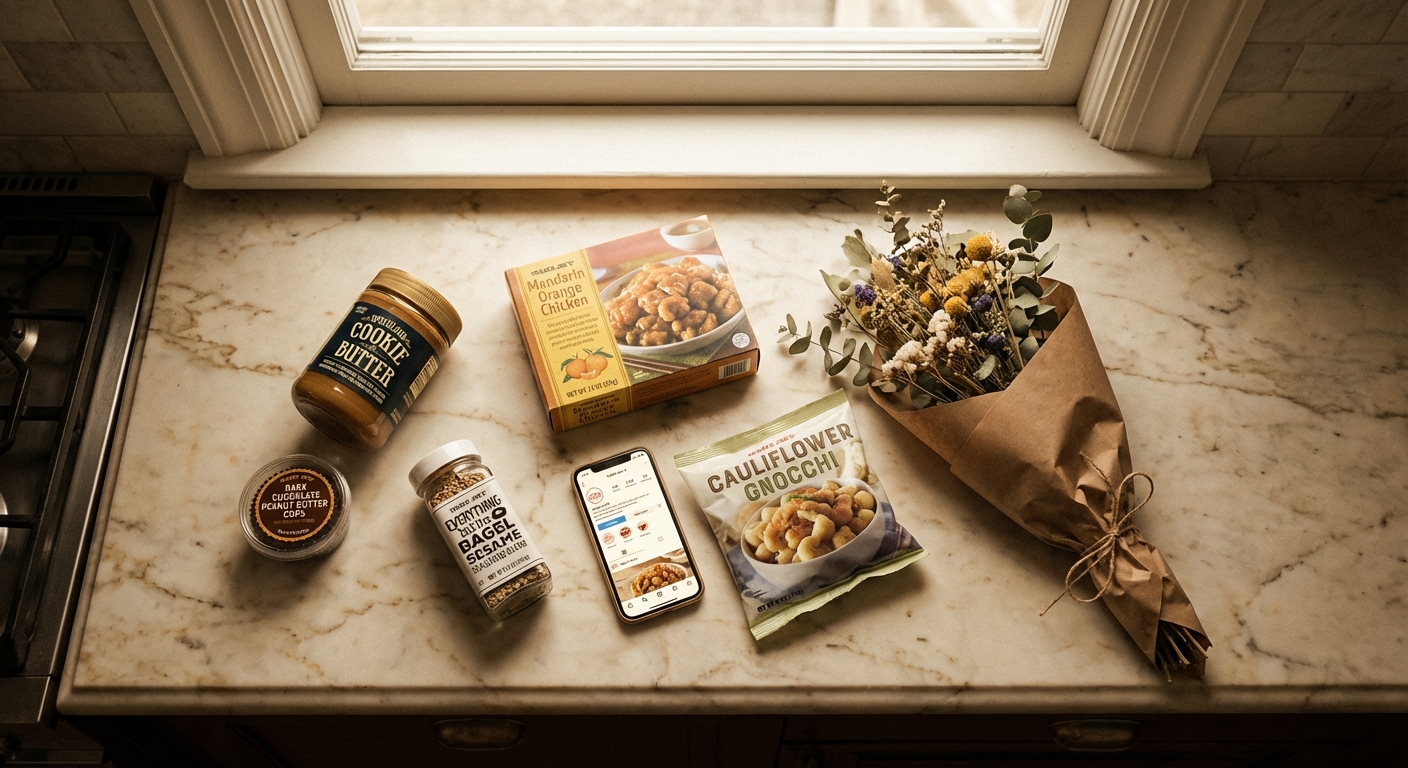
Ship's Bell Codes
Fan Milestones
2008
@TraderJoesList launched — became the brand's unofficial marketing department
2018
Inside Trader Joe's podcast launched — a rare crack in the secrecy
2020
TJ's named #1 grocery in ACSI for the fifth consecutive year
2023
TikTok explosion: "TJ's haul" videos hit 1.2 billion impressions
July 2020: A petition called on Trader Joe's to remove ethnic branding — "Trader José's," "Trader Ming's," "Arabian Joe's." TJ's initially agreed, then reversed course a week later, calling the names "an expression of fun."
COVID hazard pay: TJ's added $2–$4/hour in early 2020, then quietly cut it while simultaneously offering new hires higher starting wages. Crew members who had risked their health felt betrayed.
July 2022: The Hadley, Massachusetts store voted to unionize — the first in company history. Trader Joe's United was born: independent, unaffiliated with any national union. Minneapolis and Louisville followed.
The Pirate Joe's saga: A Vancouver man named Mike Hallatt ran a store reselling TJ's products bought on cross-border van runs — $4,000 per week in sales. TJ's sued. The case was dismissed, appealed, and became a cult legal drama.
July 2020: A petition called on Trader Joe's to remove ethnic branding — "Trader José's," "Trader Ming's," "Arabian Joe's." TJ's initially agreed, then reversed course a week later, calling the names "an expression of fun."
COVID hazard pay: TJ's added $2–$4/hour in early 2020, then quietly cut it while simultaneously offering new hires higher starting wages. Crew members who had risked their health felt betrayed.
July 2022: The Hadley, Massachusetts store voted to unionize — the first in company history. Trader Joe's United was born: independent, unaffiliated with any national union. Minneapolis and Louisville followed.
The Pirate Joe's saga: A Vancouver man named Mike Hallatt ran a store reselling TJ's products bought on cross-border van runs — $4,000 per week in sales. TJ's sued. The case was dismissed, appealed, and became a cult legal drama.
We disagree that any of these labels are racist. They are an expression of fun.
February 28, 2020
Pasadena, California · Age 89
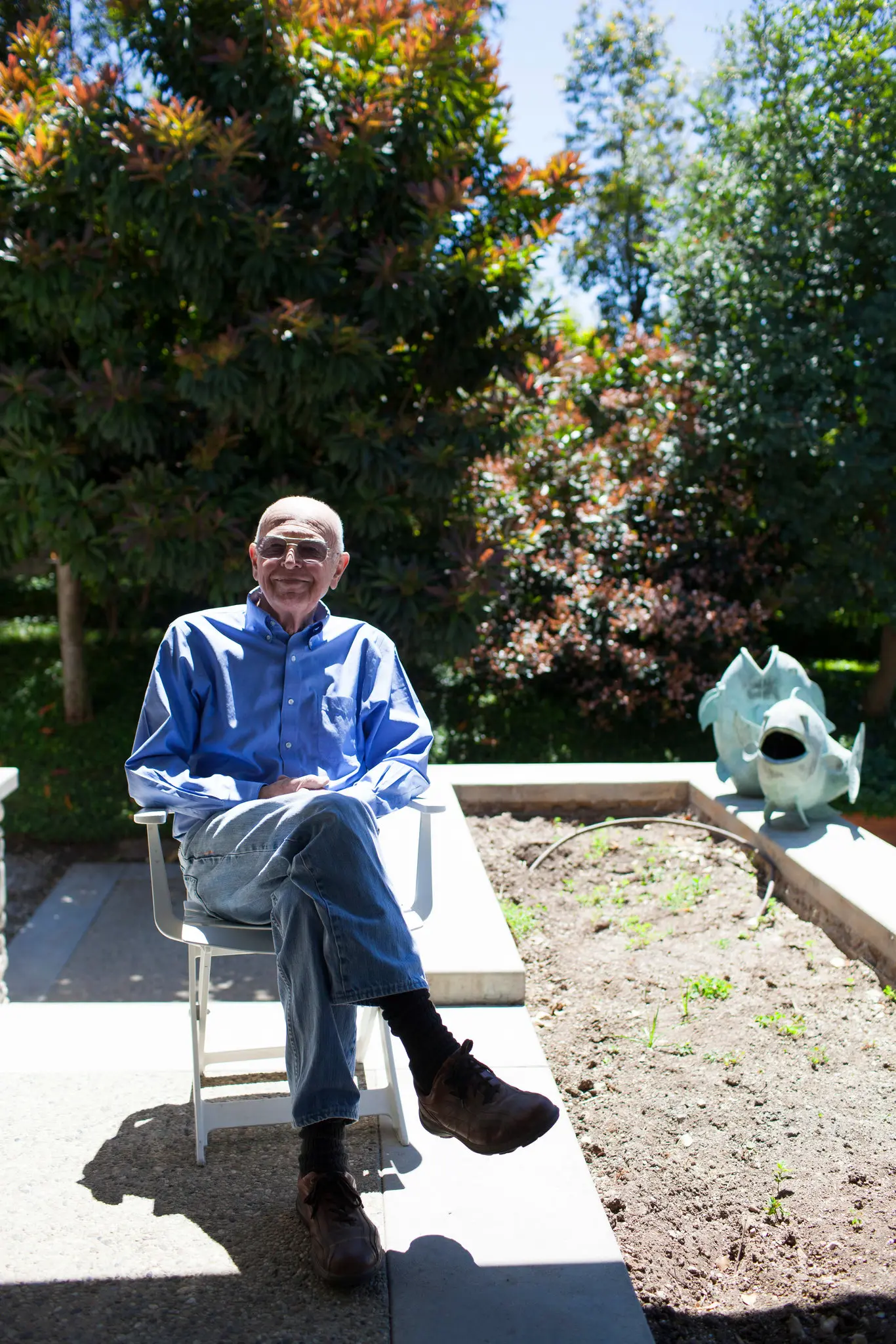
Photo: The New York Times
Joe Coulombe died on February 28, 2020 — just weeks before COVID shutdowns turned his grocery stores into essential infrastructure. He never saw the lines stretching around the block.
In his later years, Joe became a patron of the LA Opera, an amateur watercolor painter, and a quiet philanthropist. He remained a regular at his neighborhood Trader Joe's in Pasadena, browsing the aisles like any other customer.
His posthumous memoir, "Becoming Trader Joe," was published in 2021. It revealed a man who was equal parts intellectual, contrarian, and romantic — someone who genuinely believed that grocery shopping could be an adventure.
Do I regret having sold? Yes. I admit it. To mine own self I was not true when I sold.
— Joe Coulombe, Becoming Trader Joe
The Machine Today
From one store in Pasadena to 631 locations across 43 states. The machine Joe built has never stopped growing.
Stores
Est. revenue
Revenue per sqft
Store Growth · 1967 – 2025
The Family Comparison
Stores (US)
Trader Joe's
631
Aldi (US)
2,626
Philosophy
Trader Joe's
Curated experience
Aldi (US)
Utilitarian efficiency
Strategy
Trader Joe's
Experiential retail
Aldi (US)
Aggressive expansion
Same family?
Trader Joe's
Yes (Aldi Nord)
Aldi (US)
Yes (Aldi Süd)
Geographic Expansion
1
1967-1988
California Origins
1 → 27 stores
2
1988-2001
Pacific Northwest
27 → 158 stores
3
2001-2023
National Expansion
158 → 543 stores
4
2023-Present
43 States & Counting
543 → 631 stores
The machine Joe built runs without him. It may run forever.